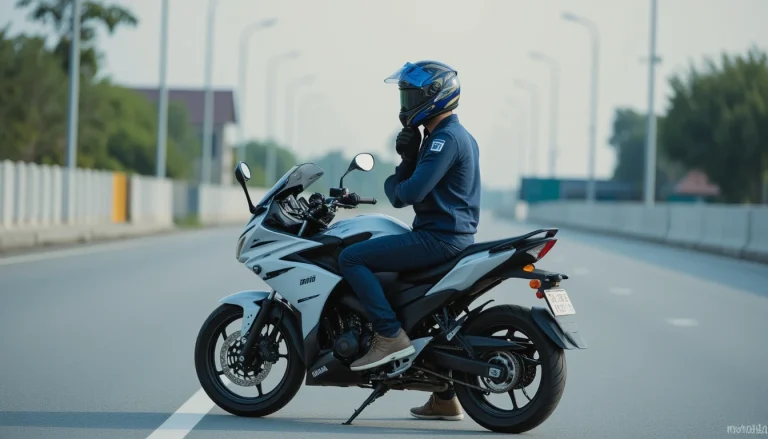
Electric & Hybrid Motorcycle Innovations in 2025: Exciting Breakthroughs in Two-Wheel Mobility
Electric & Hybrid Motorcycle Innovations
The motorcycle industry is undergoing a revolutionary transformation in 2025, with electric and hybrid technologies taking center stage. From advanced battery systems to AI-powered connectivity, these innovations are not only redefining performance but also reshaping how riders interact with their machines. Manufacturers are investing heavily in cutting-edge engineering to deliver motorcycles that are faster, cleaner, and smarter — without sacrificing the thrill of the ride. This article explores the most significant innovations in electric and hybrid motorcycles in 2025, the technology behind them, and what they mean for the future of mobility.
1. The Rise of Solid-State Battery Technology
One of the most anticipated breakthroughs in electric motorcycles is the adoption of solid-state batteries. Unlike traditional lithium-ion packs, solid-state cells offer:
- Faster charging times – some prototypes can charge from 0–80% in under 20 minutes.
- Improved safety – reduced risk of overheating or fire.
In 2025, brands like Kawasaki, Yamaha, and several startups are testing solid-state battery models that could deliver over 300 km per charge.
2. Modular and Swappable Battery Systems
Urban riders often face charging time limitations, but 2025 brings a rise in swappable battery technology. Companies such as Gogoro and Oyika are leading the way with battery swap stations that allow riders to replace a depleted battery in seconds.
Benefits include:
- Reduced downtime — no need to wait for charging.
- Scalability — fleets of delivery motorcycles can stay in constant operation.
Hybrid motorcycles are also adopting modular battery packs to extend electric-only range when needed.
3. AI-Powered Smart Connectivity
Motorcycles in 2025 are smarter than ever thanks to AI integration and IoT connectivity. This includes:
- Real-time diagnostics — predicting maintenance needs before breakdowns occur.
- Over-the-air updates — improving performance and adding features remotely.
- Safety alerts — detecting road hazards and alerting the rider.
Connectivity has moved beyond luxury to become a standard safety and performance feature.
4. Hybrid Motorcycles with Regenerative Systems
Hybrid motorcycles combine combustion engines with electric motors, delivering the best of both worlds. In 2025, models like the Yamaha FZ S Hybrid feature a Smart Motor Generator (SMG) that assists acceleration, improves fuel economy, and reduces emissions.
Key advancements include:
- Regenerative braking to recharge batteries.
- Electric assist for silent urban riding.
- Automatic transition between power sources for efficiency.
5. Sustainable Manufacturing & Recycling
Sustainability is now at the core of motorcycle design. Manufacturers are:
- Building battery recycling programs to recover valuable metals.
- Reducing factory emissions through renewable energy.
Brands like Harley-Davidson’s LiveWire and BMW Motorrad are actively promoting eco-friendly manufacturing to meet stricter environmental standards.
6. Design Innovations for Performance & Efficiency
Electric and hybrid motorcycles are benefiting from aerodynamic and lightweight designs:
- Carbon fiber frames for strength without extra weight.
- Wind-tunnel tested fairings to reduce drag and extend range.
- Integrated battery cooling for consistent performance.
These changes not only improve speed and handling but also enhance range efficiency.
7. Charging Infrastructure Expansion
The biggest challenge for electric motorcycles has always been charging access. In 2025, governments and private companies are rapidly expanding charging networks:
- Fast-charging stations along highways.
- Urban battery swap hubs for commuters.
- Solar-powered charging points in remote areas.
This expanded infrastructure makes electric motorcycles more viable for touring and long-distance travel.
8. Breakthrough Models of 2025
Several standout electric and hybrid motorcycles are making waves this year:
Yamaha FZ S Hybrid
- Type: Hybrid
- Engine: 150cc + SMG electric assist
- Mileage: 60 kmpl
Can-Am Pulse
- Type: Electric
- Range: Over 200 km
- Highlight: Liquid-cooled motor and active regeneration
Ultraviolette F99
- Type: Electric superbike
- Top Speed: 258 km/h (record-breaking)
- Highlight: Race-ready aerodynamic design
Pocket Rocket by Sol Motors
- Type: Lightweight urban electric
- Range: 42–67 miles
- Highlight: Minimalist design for city mobility
9. Market Trends and Consumer Adoption
The demand for electric and hybrid motorcycles is being driven by:
- Rising fuel prices.
- Government incentives.
- Increased environmental awareness.
- Rapid technology improvements are lowering ownership costs.
By the end of 2025, experts predict electric motorcycles will hold nearly 15% of the global two-wheeler market.
10. Challenges Ahead
Despite massive progress, there are still hurdles to overcome:
- Higher upfront costs compared to petrol bikes.
- Limited range for some entry-level models.
- Need for standardized charging and battery systems.
However, ongoing research and investment are expected to resolve these issues within the next five years.
2025 Electric & Hybrid Motorcycle Specifications Table
| Model Name | Type | Engine / Motor | Battery Capacity | Range (Full Charge) | Top Speed | Charging Time (0–80%) | Notable Features |
| Yamaha FZ S Hybrid | Hybrid | 150cc Petrol + Smart Motor Generator (SMG) | 0.7 kWh (electric assist) | 60 kmpl (combined) | 95 km/h | N/A (self-charging via engine & regen braking) | Seamless petrol-electric switch, regenerative braking, eco/boost riding modes |
| Can-Am Pulse | Electric | Liquid-cooled Electric Motor | 10 kWh | ~200 km | 135 km/h | ~30 min (DC Fast Charger) | Active regeneration, performance riding mode, connected dashboard |
| Can-Am Origin | Electric | Liquid-cooled Electric Motor | 11 kWh | ~220 km | 140 km/h | ~35 min (DC Fast Charger) | Dual-purpose design (on/off-road), adventure touring ready |
| Ultraviolette F99 | Electric Superbike | 50 kW Motor | 12.5 kWh | ~200 km (race mode) | 258 km/h | ~40 min (Fast Charger) | Aerodynamic race fairings, high-performance track electronics |
| Pocket Rocket (Sol Motors) | Electric | Hub Motor (Urban use) | 4–5.5 kWh | 67 miles (~108 km) | 80 km/h | ~45 min (Fast Charger) | Minimalist urban design, ultra-lightweight build |
| Harley-Davidson LiveWire S2 Del Mar (2025) | Electric | 60 kW Electric Motor | 15.4 kWh | ~160 km | 160 km/h | 40 min (DC Fast Charger) | H-D’s second-gen electric tech, agile street riding performance |
| BMW CE 02 (2025 Update) | Electric | 11 kW Motor | 6 kWh | 90–120 km | 95 km/h | ~45 min (Fast Charger) | Youth-oriented e-scooter styling, connected ride assist |
| Kawasaki Ninja e-1 / Z e-1 | Electric | 9 kW Electric Motor | 3 kWh | ~72 km | 105 km/h | ~1 hr (Fast Charger) | Removable battery packs, sportbike performance for urban riders |
2025 Electric & Hybrid Motorcycle Comparison
When comparing the latest electric and hybrid motorcycles in 2025, it’s important to consider range, performance, charging time, and unique features. Each model is designed for a specific riding style, from city commuting to high-speed racing.
| Model | Best For | Strengths | Weaknesses |
| Yamaha FZ S Hybrid | Riders who want a blend of petrol and electric efficiency | Great fuel economy, smooth hybrid power transition, low running cost | Not fully electric, lower top speed compared to pure electrics |
| Can-Am Pulse | Urban and highway riders wanting a sporty electric | Long range (~200 km), fast charging (30 mins), premium build | Slightly heavier than competitors in its class |
| Can-Am Origin | Adventure riders seeking electric touring | Dual-purpose design, longer range, adventure-ready suspension | Charging infrastructure needed for off-road routes |
| Ultraviolette F99 | Track enthusiasts and speed lovers | Record-breaking top speed (258 km/h), race-focused design | High price, limited range in high-performance mode |
| Pocket Rocket (Sol Motors) | City commuters and short-distance riders | Ultra-lightweight, minimalist design, easy handling | Lower top speed and range, not suited for highways |
| Harley-Davidson LiveWire S2 Del Mar | Premium street riders wanting Harley style in electric form | Strong acceleration, agile handling, Harley heritage | Expensive compared to mid-range electrics |
| BMW CE 02 (2025) | Young urban riders | Fun styling, tech features, easy to ride | Lower range than larger electric motorcycles |
| Kawasaki Ninja e-1 / Z e-1 | Sportbike lovers in the city | Sporty design, removable batteries, decent top speed for its size | Short range (~72 km), more suited for short commutes |
Quick Stats Comparison
| Model | Type | Range | Top Speed | Charging (Fast) | Price Range (Est.) |
| Yamaha FZ S Hybrid | Hybrid | 60 kmpl equiv. | 95 km/h | N/A | $1,800–$2,200 |
| Can-Am Pulse | Electric | ~200 km | 135 km/h | 30 min | $14,000–$16,000 |
| Can-Am Origin | Electric | ~220 km | 140 km/h | 35 min | $15,500–$17,500 |
| Ultraviolette F99 | Electric | ~200 km | 258 km/h | 40 min | $18,000+ |
| Pocket Rocket | Electric | 108 km | 80 km/h | 45 min | $5,500–$6,500 |
| Harley-Davidson LiveWire S2 Del Mar | Electric | ~160 km | 160 km/h | 40 min | $16,000–$17,000 |
| BMW CE 02 | Electric | 90–120 km | 95 km/h | 45 min | $7,500–$8,500 |
| Kawasaki Ninja e-1 / Z e-1 | Electric | 72 km | 105 km/h | 1 hr | $8,000–$9,000 |
Key Takeaways for Buyers
- Best Long-Range Option: Can-Am Origin (~220 km)
- Fastest Charging: Can-Am Pulse (30 mins to 80%)
- Highest Top Speed: Ultraviolette F99 (258 km/h)
- Best for City Use: Pocket Rocket & BMW CE 02
- Most Affordable Hybrid: Yamaha FZ S Hybrid
How AI is Transforming Electric Motorcycle Safety in 2025
Artificial Intelligence (AI) is no longer just a buzzword in the tech world — it’s now a key player in transforming electric motorcycle safety. In 2025, leading motorcycle manufacturers are integrating AI-powered systems to enhance rider protection, improve vehicle performance, and predict potential risks before they occur. This shift is making electric motorcycles not only eco-friendly but also smarter and safer than ever before.
1. AI-Powered Collision Detection and Prevention
Modern electric motorcycles now feature AI-driven advanced driver assistance systems (ADAS) that continuously analyze the environment in real time. Using data from lidar, radar, and high-resolution cameras, AI algorithms can:
- Detect vehicles, pedestrians, and obstacles ahead
- Predict potential collisions within milliseconds
- Trigger emergency braking or evasive maneuvers
This technology significantly reduces accident risks, especially in urban traffic where sudden stops are common.
2. Predictive Maintenance and Fault Prevention
Electric motorcycles equipped with AI can now predict component failures before they happen. The onboard AI monitors:
- Battery health and charging cycles
- Motor temperature and performance metrics
- Brake wear and tire pressure trends
If a fault is detected, the system notifies the rider and, in some cases, automatically schedules a service appointment. This reduces breakdowns and ensures the bike stays in optimal condition.
3. AI-Enhanced Rider Assistance Systems
AI helps tailor the riding experience by adjusting power delivery, suspension, and regenerative braking based on the rider’s style. For example:
- In wet weather, AI reduces torque to prevent wheel slip
- During cornering, it adjusts suspension for better grip
- In heavy traffic, it optimizes energy usage for extended range
This adaptability ensures both safety and comfort during every ride.
4. Smart Helmet Integration
Some AI-enabled helmets are changing how riders interact with their motorcycles. These helmets feature:
- Voice-controlled navigation
- AI-powered hazard alerts (like upcoming sharp turns or traffic jams)
- Real-time blind spot monitoring
- Crash detection with automatic emergency calls to contacts and paramedics
This creates a fully connected riding ecosystem where the rider and bike work as one unit.
5. Accident Data Analysis for Safer Roads
AI doesn’t just protect individual riders — it’s also improving overall road safety. Data collected from connected electric motorcycles is analyzed to:
- Identify accident-prone zones
- Recommend safer routes
- Help city planners improve road design
Manufacturers like Yamaha, Harley-Davidson, and Ultraviolette are already using this data to fine-tune safety systems for future models.
6. AI and Autonomous Emergency Response
In severe crash scenarios, some electric motorcycles are being equipped with autonomous crash response systems:
- AI detects the crash severity
- Sends GPS coordinates to emergency services
- Provides live ride data to first responders
This drastically reduces response time, which is critical in life-threatening accidents.

AI Safety Features in 2025 Electric Motorcycles – Brand Comparison
| Brand / Model | AI Collision Prevention | Predictive Maintenance | Smart Helmet Integration | Adaptive Riding Modes | Emergency Crash Response |
|---|---|---|---|---|---|
| Yamaha FZ S Hybrid | ✔ Basic lane & hazard alerts | ✔ Battery & brake monitoring | ✘ Not available | ✔ Hybrid power optimization | ✘ No auto-response |
| Can-Am Pulse | ✔ Advanced ADAS with radar | ✔ Full-system diagnostics | ✔ Compatible with 3rd-party AI helmets | ✔ Weather & terrain adaptation | ✔ Automatic SOS |
| Ultraviolette F99 | ✔ High-speed AI crash prevention | ✔ Race telemetry-based maintenance | ✔ Integrated AR display in helmet | ✔ Track & street adaptive modes | ✔ GPS emergency call |
| Harley-Davidson LiveWire S2 Del Mar | ✔ Blind spot & rear collision alerts | ✔ Battery health prediction | ✔ Built-in voice AI in helmet | ✔ Torque & suspension control | ✔ Auto accident reporting |
| BMW CE 02 (2025) | ✔ City hazard recognition | ✔ Tire & brake wear alerts | ✔ Helmet with navigation & hazard feed | ✔ Urban ride optimization | ✔ Crash alert with location |
| Kawasaki Ninja e-1 / Z e-1 | ✔ Lane departure & object detection | ✔ Battery diagnostics only | ✘ Not standard | ✔ Sport & eco AI modes | ✘ Optional upgrade |
Key Observations:
- Best for Full AI Safety Suite: Can-Am Pulse & Ultraviolette F99
- Best for Urban Safety: BMW CE 02 with AI hazard recognition
- Best Racing AI Tech: Ultraviolette F99’s track telemetry system
- Most Affordable AI Integration: Yamaha FZ S Hybrid
Top Electric Motorcycle Safety Gadgets in 2025 That Every Rider Should Know
In 2025, electric motorcycles are faster, smarter, and safer than ever — thanks to a new generation of safety gadgets designed to protect riders on every journey. Whether you ride for commuting, adventure touring, or racing, these innovations can significantly reduce the risk of accidents and enhance your riding experience.
1. AI-Powered Smart Helmets
Smart helmets have evolved far beyond basic head protection. Equipped with AI-assisted navigation, blind-spot warnings, and voice control, modern helmets act as an intelligent co-pilot. Some models, like the Jarvish X-AR, even project augmented reality displays inside the visor, showing turn-by-turn directions and hazard alerts in real time. Integrated crash detection sensors automatically call emergency services if a severe impact is detected.
2. Adaptive Riding Gear
In 2025, riding jackets and pants come with integrated airbags that deploy instantly during a fall or collision. AI algorithms in wearable sensors detect abnormal movement patterns and trigger airbag inflation in milliseconds. Brands such as Alpinestars Tech-Air have refined this technology to work seamlessly for both city riders and long-distance travelers.
3. Advanced Lighting Systems
Visibility is crucial for motorcycle safety, and electric motorcycles now feature adaptive LED headlights with AI-controlled beam patterns. These lights automatically adjust brightness and direction based on speed, lean angle, and surrounding traffic. Riders benefit from improved night visibility and better awareness in poor weather conditions.
4. Rear-View Radar Systems
Similar to what you find in modern cars, rear-view radar is now available for motorcycles. This gadget alerts riders about fast-approaching vehicles from behind or objects in blind spots. Paired with AI analysis, the system can predict potential collision risks and provide early warnings through the dashboard or helmet HUD.
5. Regenerative Braking with AI Control
While regenerative braking is standard in many electric motorcycles, 2025 models feature AI-controlled energy recovery systems that balance stopping power and battery charging efficiency. This ensures smoother braking, reduces brake wear, and improves rider safety during sudden stops.
6. GPS-Based Emergency Alert Systems
In case of an accident, GPS-enabled devices like Dainese D-Air automatically send the rider’s location and crash details to emergency responders. Some systems even share live medical data such as heart rate and oxygen levels, allowing paramedics to prepare before arrival.
7. Smartphone-Connected Dashboards
Modern electric motorcycles integrate directly with smartphones, giving riders access to real-time diagnostics, route planning, and safety alerts. AI algorithms process riding data to suggest safer routes, avoid accident-prone areas, and even adjust power delivery for optimal control.
Conclusion
2025 marks a turning point for the motorcycle industry. Electric and hybrid motorcycles are no longer niche products; they are becoming mainstream thanks to innovations in battery technology, connectivity, sustainability, and design. With governments, manufacturers, and riders all embracing the shift, the future of two-wheel mobility promises to be cleaner, faster, and smarter than ever before. Whether you’re a city commuter or an adventure tourer, the electric and hybrid revolution offers a ride worth experiencing.
The electric motorcycle industry in 2025 is not just about speed and style — it’s about safety through technology. From AI-powered helmets to adaptive riding gear and radar-based warning systems, today’s riders have access to gadgets that make riding both thrilling and secure. As technology advances, these safety innovations will continue to shape the future of motorcycling, ensuring that the next generation of riders enjoys both freedom and protection.